Wire the Alarm Before the Kitchen Catches Fire: Pre-Committing Your Bankroll Like a Risk Manager
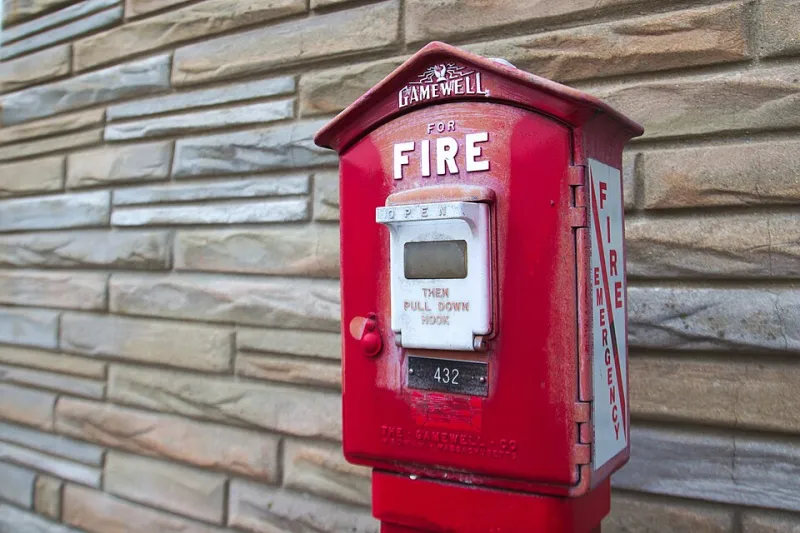
Photo: Decreasing volume, CC BY-SA 4.0, via Wikimedia Commons
Every bettor has a story about the night the wheels came off. The lost parlay that turned into a deposit, the deposit that turned into three more, the 1 a.m. session that felt like a rescue mission. What almost nobody has is a story about the alarm that stopped it — because most of us never install one.
Here at 25Hots, we talk a lot about temperature. Reading whether a line is lukewarm or genuinely hot, checking whether your bankroll is running a fever before you click bet. But temperature only matters if something reacts to it. A thermometer sitting on the wall doesn't put out fires. That's where the alarm comes in.
Why Your Willpower Is a Terrible Firefighter
The obvious answer to tilt is "just stop." And every gambler who's ever chased a loss believed, in the moment, that they could. The problem isn't discipline — it's timing. By the time you feel like you're in trouble, the part of your brain doing the deciding is already compromised. Losses trigger the same chase circuitry as a near-win. You're not choosing to keep betting; you're negotiating with someone who has a huge emotional stake in the outcome. You lose that negotiation most of the time.
This is why manual limits — "I'll quit if I drop $200" — fail so reliably. They're enforced by the person with the least incentive to enforce them.
Professionals in actual risk industries solved this decades ago. A pilot doesn't decide mid-flight whether the fuel gauge matters. A trader doesn't get to renegotiate their stop-loss after it triggers. The whole point of a circuit breaker is that it's pre-committed — decided by a calm version of you and executed on a version of you who can't be trusted.
Build the Tripwires Before You Need Them
A real alarm system has multiple sensors, and yours should too. Here's the stack, roughly in order of how often each one saves you.
The session stop-loss. Pick a number you can lose without flinching — genuinely flinching, not the macho version. Make it a fraction of your bankroll, not a fraction of your paycheck. Write it down. When it's gone, the session is over, and here's the key: the money is gone in your head the moment you deposit it. You're not losing $150 tonight; you already spent $150 on entertainment and got a variable amount of fun in return.
The win brake. This one feels backwards, but hot sessions melt bankrolls too. Give-backs are real — you hit +$400, the adrenaline says the game is easy, and forty minutes later you're at even and pressing bigger. Set a give-back threshold: if your peak profit drops by half, the session ends. It sounds arbitrary. It is. That's the feature.
The deposit lock. Most books, including offshore operations like 1xBet, let you set deposit ceilings in your account settings. Set it low. Set it so that adding money requires a deliberate act of waiting, not a saved card and two taps. If the platform won't let you self-limit, use external friction: remove saved payment methods, delete the app between sessions, keep your betting float in a separate account that your main banking never touches.
The time fuse. Losses get all the attention, but time is the sneakier leak. A session that runs three hours longer than planned is a session where every edge you had has quietly evaporated. Set a timer. When it buzzes, you're done whether you're up or down. The alarm doesn't care about your record tonight.
The Cooling-Off Ritual
When a tripwire fires, the alarm isn't the end of the process — it's the beginning of a routine. Fire drills work because nobody has to improvise. Yours should be just as rehearsed.
Stand up. Physically leave the room. Put the phone in another room if the app lives on it. Eat something, shower, walk the dog, watch a highlight reel of anything that isn't your losing ticket. The goal isn't to feel better about the loss; it's to let the chemical hangover of the session pass before you make another financial decision. Twenty minutes minimum. If you're still itching to get back in after twenty, that itch is the data — extend the drill.
For bigger breaches — blowing through a stop-loss, making a deposit you swore you wouldn't — extend the cooling-off to a full day. No exceptions, no "just one small bet to get back to even." Even is the most expensive word in gambling.
Audit the Alarm Quarterly
Limits rot. The $100 session cap that felt aggressive in September feels like pocket change in December, especially after a few months of successful betting. Every few months, sit down with your ledger — you do keep one, right? — and ask three questions. Did any tripwire fire, and did I respect it? Did I deposit outside my planned schedule? Is my current limit still a number that would genuinely sting?
If you breached limits more than once, the problem isn't the numbers — it's that they were set by the optimistic version of you. Cut them in half and let the calm version of you earn the increase back.
The Point of All This
Nobody installs a smoke alarm because they expect a fire. You install it because fires don't schedule themselves around your convenience. A bankroll limit works the same way: the moment you're sure you don't need it is exactly the moment it's earning its keep.
Set the tripwires tonight, while you're calm and nobody's chasing anything. Future you — the one holding a phone at midnight with a decision to make — will either thank you or never know the difference. Both outcomes are wins.